
Heel pain and plantar fasciitis: what helps, and how long it takes.
If your first steps out of bed feel like walking on a bruise, you're in very common company. Plantar heel pain usually gets better, but it rarely hurries. Here's what's going on, what tends to help most, and how to make the wait easier.
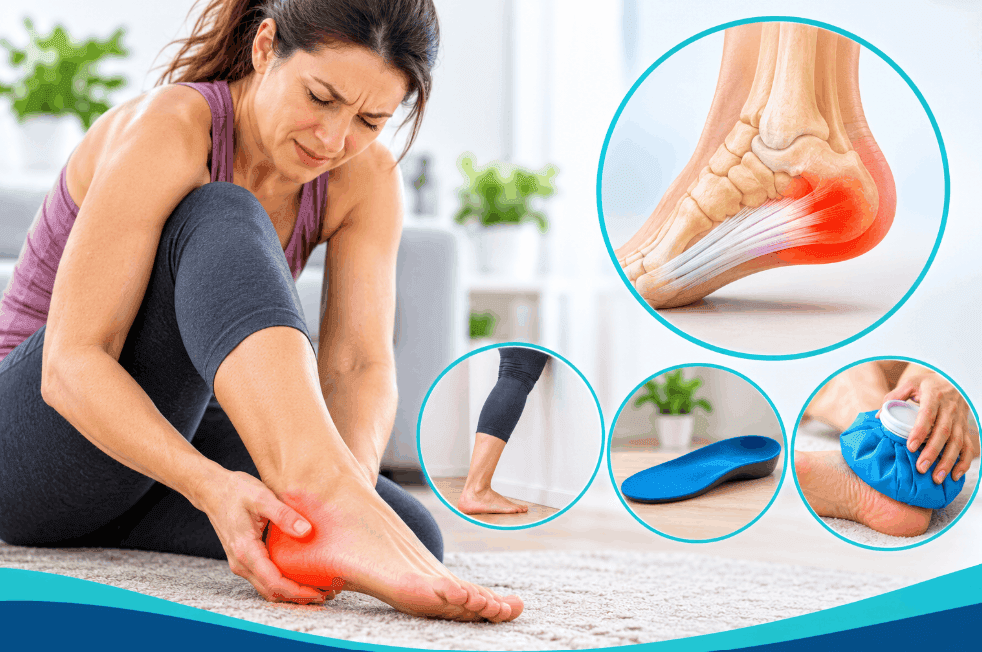
The short answer
- What it is
Pain under the heel, usually worst with the first steps in the morning or after sitting. It comes from irritation where the thick band under your foot attaches to the heel bone.
- What helps
Calf and foot stretching, gradual strengthening, supportive shoes, and easing back temporarily on the activities that aggravate it. Taping and hands-on treatment can help in the short term.
- How long
Most people improve over a few months, though it can take up to a year. Sticking with the basics matters more than finding a perfect treatment.
Plantar heel pain, often called plantar fasciitis, is one of the most common foot problems seen by GPs, podiatrists, physios and myotherapists. It affects runners and walkers, people who stand all day at work, and plenty of people who haven't changed anything at all.
The good news is that it usually responds to simple, consistent care. The frustrating part is that it can take months. Knowing what to expect makes it much easier to stick with what works.
What plantar fasciitis is
The plantar fascia is a thick band of tissue running along the sole of your foot from your heel to your toes. It helps support the arch and absorbs load every time you take a step.
With plantar heel pain, the area where this band attaches to the heel bone becomes irritated and sensitive. Despite the "-itis" in the name, it's usually more of an overload problem than ongoing inflammation, which is why many clinicians now prefer the term plantar heel pain.
Typical signs
- Sharp or stabbing pain under the heel with your first steps in the morning
- Pain that eases after a few minutes of walking, then returns after sitting or standing for a long time
- Tenderness when you press on the inside of the heel
- Pain that's often worse after activity rather than during it
Why it happens
Most of the time there isn't a single cause. It's usually a combination of factors that add up to more load than the tissue is ready for:
A change in activity, such as starting running, walking more on holidays or a new job on your feet
Long periods of standing, especially on hard floors
Tight or weak calf muscles, which put more strain through the foot
Unsupportive or worn-out footwear, or lots of time in thongs or bare feet on hard surfaces
Body weight, which increases the load on the heel with every step
What helps most
Most people get better with a combination of simple measures, kept up for several weeks.
Stretching
Calf stretches and stretches for the sole of the foot, especially before your first steps in the morning
Strengthening
Gradual calf and foot strengthening, such as slow heel raises, built up over weeks
Footwear
Supportive, cushioned shoes, worn indoors as well as out. Heel cups or inserts help some people
Managing load
Temporarily cutting back on the activities that flare it, while staying active in other ways such as cycling or swimming
Before you get out of bed
Many people find it helps to gently stretch the calf and foot before standing up in the morning. Pull your toes back towards your shin with a towel or your hand for 20 to 30 seconds, a few times. Put on supportive shoes or slippers straight away instead of walking barefoot.
Heel pain rewards patience. The basics, done consistently, beat chasing the next quick fix.
Where hands-on treatment fits
A myotherapist or remedial massage therapist can help by working on tight calf and foot muscles, using taping to offload the heel for a few days, and in some cases dry needling. A 2024 review of 12 trials found that adding dry needling to routine care reduced plantar fasciitis pain more than routine care alone, although the benefit may take around a month to appear.
Hands-on treatment works best alongside the exercises and changes above. A good therapist will give you a home plan and help you adjust it as things improve. Podiatrists are also a great option for footwear and orthotic advice.
For heel pain that persists despite several months of good care, your GP may discuss other options, such as shockwave therapy or an injection. These have their own pros and cons, so ask about both.
How long it takes
Plantar heel pain is known for being slow. Many people notice improvement within six to twelve weeks of consistent care, but full recovery can take several months and sometimes up to a year. Good and bad days are normal along the way.
Tracking how your first steps feel each morning is a simple way to see whether you're heading in the right direction.
Common mistakes
Stopping the exercises as soon as it feels better. Keep going for a few weeks after the pain settles.
Going barefoot on hard floors at home while it's sore.
Returning to full running or long walks too quickly. Build back up gradually.
Hoping it will settle without changing anything. It sometimes does, but usually much more slowly.
Finding a therapist
On the directory, filter by Sports injury or Dry Needling, and look for therapists who mention foot and heel pain in their profile.
When to see a doctor
See your GP if you have heel pain with:
- A fall, jump or injury before it started, or you can't put weight on your foot
- Swelling, redness or heat in the heel
- Numbness, tingling or burning in the foot
- Pain at night or at rest that doesn't ease
- Fever or feeling generally unwell
- Pain in both heels along with other joint pain or stiffness
- Diabetes, especially with any change in the skin or feeling of your feet
Ready to look?
Find a therapist for heel pain
Search by suburb, therapy or what you're dealing with. Every listing is checked against a national association register.
This guide is general information, not medical advice. If your heel pain followed an injury, is severe, or comes with any of the warning signs above, see your GP before starting treatment.
Find a myotherapist near you
Every practitioner in the directory is verified before their listing goes live. Search by suburb, therapy or health fund.
Related articles
- Injury & Recovery3 Nov 2026

Lower back pain that won't go away: what actually helps.
Most lower back pain settles within a few weeks. When it doesn't, it's easy to start worrying that something is badly wrong, or to feel like you've tried everything. Here's what's usually going on with back pain that lingers, and the approaches most likely to help.
MyoFitness Team · 6 min read - Injury & Recovery1 Nov 2026
Why stretching isn't fixing your tight muscles.
You stretch your hamstrings every day and they still feel like piano wire. You're not doing it wrong. Feeling tight and actually being short aren't the same thing, and there are several reasons a muscle can feel tight that stretching alone won't change.
MyoFitness Team · 6 min read - Injury & Recovery21 Oct 2026
Why runners and gym-goers keep getting the same injuries.
The calf that tightens every spring. The hamstring that twinges whenever you sprint. The Achilles that grumbles after every long run. If an injury keeps coming back, it's usually telling you something about load and recovery. Here's how to read the signs and break the cycle.
MyoFitness Team · 7 min read