
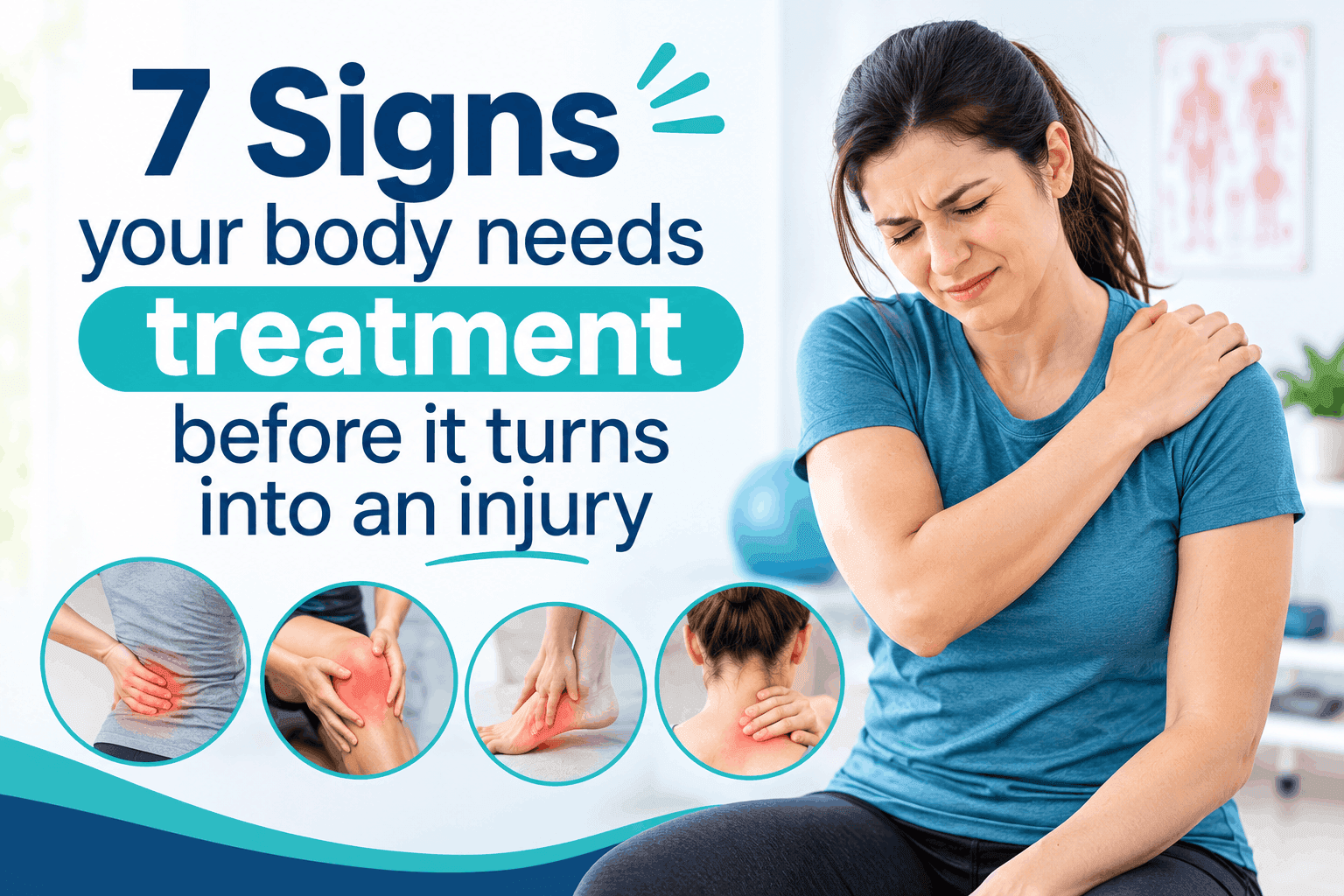
7 signs your body needs treatment before it turns into an injury.
Most aches and stiffness settle on their own with a bit of common sense. But some early signs suggest a small problem is building into a bigger one. Here's how to tell the difference, and when it's worth booking in.
The short answer
- The signs
Tightness that keeps coming back, less movement, recurring niggles, weakness, compensating, slow recovery and pain that affects sleep or daily life.
- Why act early
Small problems are often quicker and easier to settle than ones that have been building for months.
- Good to know
Plenty of aches settle in days to a couple of weeks with sensible changes to activity. Treatment is worth considering when they don't.
Most of us carry around a few aches. A stiff neck after a long day, sore legs after a big walk, a bit of back tightness after gardening. That's normal, and most of it settles without any treatment at all.
But sometimes the body gives quieter signals that something is building. Noticing them early can mean a shorter, simpler fix. This guide covers seven signs worth paying attention to, and how to decide what to do next.
Not every ache needs treatment
Before the signs, a reality check. Muscle soreness after new or harder exercise is common and usually eases within a few days. Stiffness after a long drive or a day at a desk often settles once you get moving. Many minor strains improve within a couple of weeks with sensible changes to what you're doing.
It's also worth knowing that hands-on treatment isn't the only answer. Staying active, adjusting your load, sleeping well and building strength all play a big part. Treatment is most useful when it helps you do those things more comfortably.
So the signs below aren't a reason to worry about every twinge. They're a way of spotting the aches that are worth a closer look, so you can deal with them while they're still small. If you notice one, think about how long it's been there and which way it's heading.
The question isn't whether something hurts. It's whether it's getting better, staying the same or slowly getting worse.
Signs 1 to 3: tightness and movement
1. Tightness that keeps coming back
A tight spot that loosens with stretching or a massage, only to return within a day or two, can be a sign that something is keeping it under strain. That might be a desk setup, a training habit, weakness elsewhere or stress. It's worth finding out what's driving it rather than just chasing the tightness.
2. You're moving less than you used to
Perhaps you can't turn your head as far to check a blind spot, reach as high to a shelf or bend as easily to tie your shoes. Gradual loss of movement is easy to miss because it creeps up. If you notice you're avoiding certain movements, that's a useful signal.
3. The same niggle, again and again
A calf that tightens every time you increase your running, or a shoulder that aches every few weeks at the gym, is telling you something. Recurring niggles often mean an area isn't quite coping with the load you're putting on it.
Signs 4 and 5: weakness and compensation
4. Weakness or a sense of giving way
Noticing one side feels weaker, or that a knee or ankle feels unstable, is worth paying attention to. Sometimes it's the result of pain making you use a muscle less. Sometimes it's an early sign of something else. If weakness comes on suddenly or comes with numbness or tingling, see a GP rather than a massage therapist first.
5. Compensating without meaning to
Limping slightly, shifting your weight to one leg when you stand, changing your running stride or lifting technique, or using your other arm for everyday tasks are all forms of compensation. Your body is protecting a sore area, which is useful in the short term. Over time, though, it can overload other areas and set up a second problem.
Signs 6 and 7: recovery and daily life
6. You're not recovering like you used to
If you're sore for days after activities that used to be fine, or you feel stiff and heavy most mornings, your body may be struggling to recover. That can relate to training load, sleep, stress or something else going on with your health. It's a good time to ease back and take stock.
7. Pain is changing your sleep or daily life
Pain that wakes you, stops you getting comfortable in bed, or makes you avoid work tasks, exercise or time with family is worth addressing. Poor sleep can make pain feel worse, and pain can make sleep worse, so it's a cycle worth breaking early.
| Usually settles on its own | Worth getting checked |
|---|---|
| Soreness for a few days after new exercise | Soreness that lingers for weeks or keeps returning |
| Stiffness that eases once you get moving | Stiffness that's gradually limiting how you move |
| A minor strain that improves week by week | A strain that isn't improving, or gets worse with activity |
- Worth getting checked
- Soreness that lingers for weeks or keeps returning
Soreness for a few days after new exercise
- Worth getting checked
- Stiffness that's gradually limiting how you move
Stiffness that eases once you get moving
- Worth getting checked
- A strain that isn't improving, or gets worse with activity
A minor strain that improves week by week
What to do when you notice them
Noticing one or two of these signs doesn't mean you're injured. It's a prompt to make some changes and keep an eye on things:
Adjust your load. Ease back on whatever aggravates it, without stopping all activity.
Keep moving in ways that feel comfortable.
Look at your setup and habits, such as desk position, training plan, footwear or lifting technique.
Give it a couple of weeks. If it's clearly improving, keep going. If it isn't, it's a good time to book in.
Who to see
For muscle and joint aches without red flags, a manual therapist is a reasonable place to start. A good therapist will assess what's going on, treat where it helps and give you a plan, and refer you on if needed.
| Myotherapist | Remedial massage therapist | GP |
|---|---|---|
| Good for recurring or specific problems, with more assessment and a home exercise plan | Good for general tightness and soreness and for regular upkeep | The right first stop if you have any red flags, or if you're not sure what's going on |
- Remedial massage therapist
- Good for general tightness and soreness and for regular upkeep
- GP
- The right first stop if you have any red flags, or if you're not sure what's going on
Good for recurring or specific problems, with more assessment and a home exercise plan
On the directory, you can browse Myotherapy or Remedial Massage, or filter by concerns such as Low back pain, Neck & shoulder pain and Sports injury.
When to see a GP or call 000
Call 000
Call 000 for chest pain, sudden severe headache, sudden weakness or numbness in your face, arm or leg, slurred speech, or a serious fall or accident.
See a GP promptly, rather than starting with massage, if you have:
- New numbness, pins and needles or weakness in an arm or leg
- Back pain with numbness around the groin or new bladder or bowel problems. Go to an emergency department.
- A hot, red, swollen joint, or pain with a fever
- Calf pain with swelling and warmth
- Pain that wakes you at night regardless of position, or comes with unexplained weight loss or feeling generally unwell
- Pain after a fall or injury that you can't put weight on
Ready to look?
Find a therapist near you
Search by suburb, therapy or what you're dealing with. Every listing is checked against a national association register.
This guide is general information, not medical advice. If you're unsure whether a symptom needs attention, see your GP or a qualified health practitioner for an assessment.
Find a myotherapist near you
Every practitioner in the directory is verified before their listing goes live. Search by suburb, therapy or health fund.
Related articles
- Remedial Massage30 Oct 2026

Massage vs myotherapy: which one do you actually need?
Relaxation massage, remedial massage and myotherapy can look similar on a booking page, but they're designed for different jobs. Here's how they differ, and a simple way to choose what to book.
MyoFitness Team · 6 min read - Remedial Massage15 Oct 2026
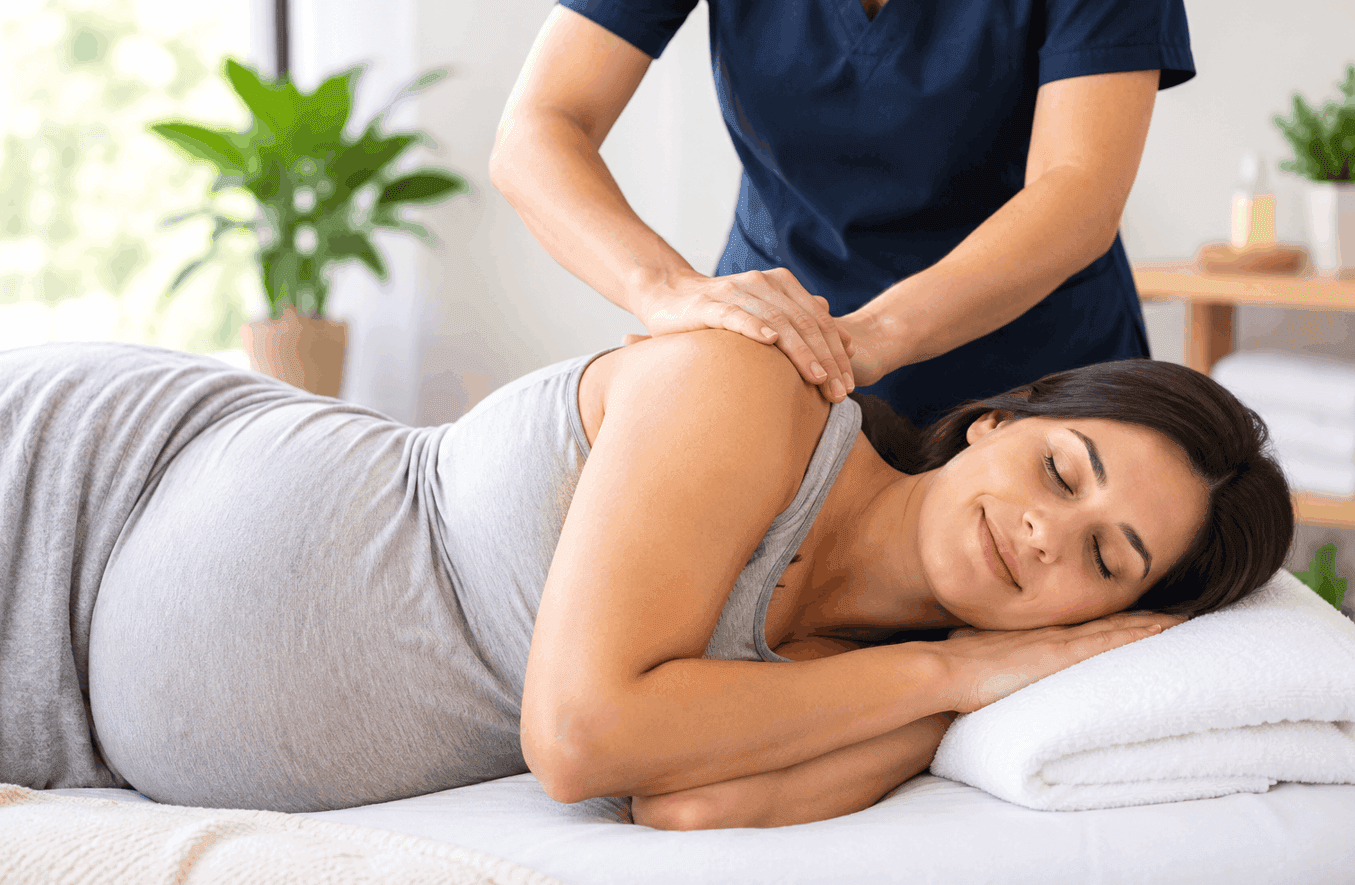
Pregnancy massage In Australia: is it safe, and what to expect
Aching hips, a sore lower back and shoulders that never quite relax are all common in pregnancy. Massage from a therapist trained in pregnancy care can help you feel more comfortable. Here's how it's done safely and what to check before you book.
MyoFitness Team · 5 min read - Remedial Massage13 Oct 2026

Pregnancy massage: is it safe, and what to expect.
Aching hips, a sore lower back and shoulders that never quite relax are all common in pregnancy. Massage from a therapist trained in pregnancy care can help you feel more comfortable. Here's how it's done safely and what to check before you book.
MyoFitness Team · 5 min read