
Pregnancy massage: is it safe, and what to expect.
Aching hips, a sore lower back and shoulders that never quite relax are all common in pregnancy. Massage from a therapist trained in pregnancy care can help you feel more comfortable. Here's how it's done safely and what to check before you book.

The short answer
- 01
Is it safe?
For most people with an uncomplicated pregnancy, massage from a therapist trained in pregnancy massage is considered safe. Check with your midwife or doctor first if your pregnancy is high risk.
- 02
How it's done
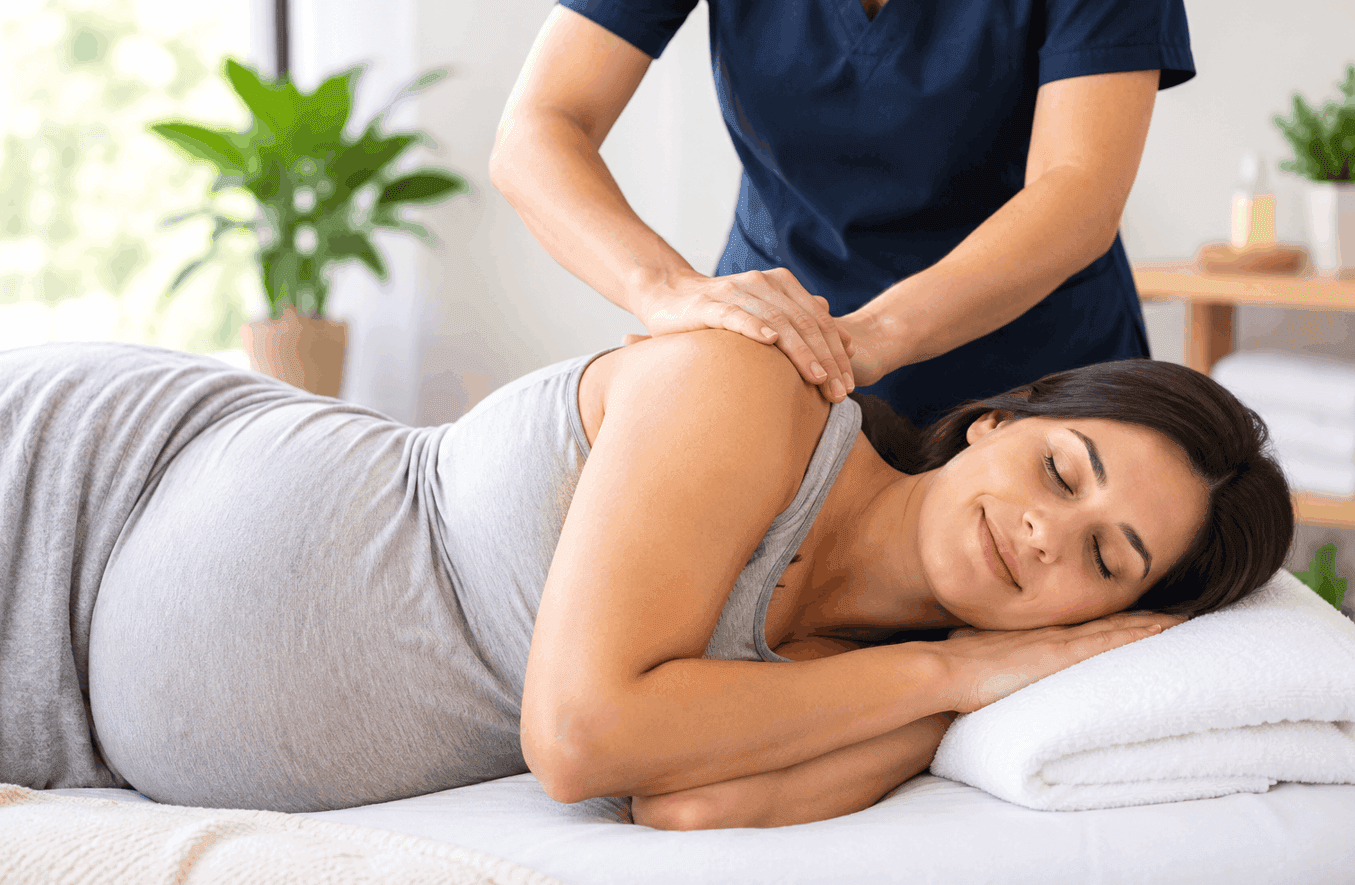
Usually side-lying with pillows from the second trimester onwards, with gentler pressure and plenty of position changes for comfort.
- 03
Who to see
A remedial massage therapist or myotherapist with specific pregnancy massage training, who asks about your pregnancy before starting.
Pregnancy changes how you carry yourself almost week by week. Your centre of gravity shifts, ligaments soften, and sleep gets harder as your bump grows. It's no surprise that back, hip and pelvic aches are common.
Massage is one way to ease some of that discomfort. Like most things in pregnancy, it's best done by someone who knows what they're doing. This guide explains what to look for.
Is it safe?
For most people with a healthy, uncomplicated pregnancy, massage from a trained therapist is considered safe. The key differences from a regular massage are about position, pressure and screening: the therapist asks about your pregnancy, positions you comfortably and adjusts the work as your body changes.
You may have heard that massage in the first trimester can cause miscarriage, or that pressing certain points can bring on labour. There's no good evidence for either. Some therapists still prefer a gentler approach in the first trimester, and to avoid firm pressure on particular areas, as a precaution. If you've had previous miscarriages or are anxious about it, talk to your midwife or doctor and let your therapist know.
What it can help with
- Lower back and hip aches
- Pelvic girdle pain, which is pain around the front or back of the pelvis
- Neck, shoulder and upper back tension, especially as breasts change
- Leg cramps and general tiredness in the legs
- Difficulty relaxing and getting comfortable
Research on pregnancy massage is limited, but small studies suggest it may help with comfort, relaxation and some types of pain. It works well alongside other care, such as guidance from a women's health physio if pelvic pain is significant.
A good pregnancy massage is mostly about comfort: the right position, the right support and pressure that suits you on the day.
How it changes by trimester
First trimester
Often a gentler approach. Nausea and tiredness may mean shorter sessions or a different position.
Second trimester
Side-lying becomes the main position, supported by pillows or bolsters. Lying flat on your back is usually limited.
Third trimester
Side-lying or semi-reclined only, with frequent position changes and plenty of support. Sessions are adapted to comfort.
Later in pregnancy, lying flat on your back can make some people feel dizzy, light-headed or sick, because the weight of the uterus can press on a large blood vessel. That's why trained therapists use side-lying positions. Tell your therapist straight away if you feel unwell in any position.
When to check first
Speak with your midwife, GP or obstetrician before booking a massage if you have:
The short version
- A high-risk pregnancy, or one being closely monitored
- High blood pressure or pre-eclampsia
- Bleeding, or a low-lying placenta
- A history of blood clots, or a clotting disorder
- Been advised to rest, or there's a risk of premature labour
- Gestational diabetes or another medical condition you're being treated for
Tell your therapist
Let your therapist know how many weeks pregnant you are, about any complications and any advice your care team has given. A good therapist will ask, and will happily wait for your midwife's go-ahead if needed.
Choosing a therapist
Look for a remedial massage therapist or myotherapist who:
- Has completed specific pregnancy massage training
- Has the right equipment, such as bolsters and pillows for side-lying, or a pregnancy cushion
- Asks about your pregnancy and health before starting
- Is comfortable working through your pregnancy and into the postnatal period
On the directory, filter by Pregnancy Massage or Pregnancy-related pain. Some therapists offer home visits, which can be easier late in pregnancy. Look for the "Comes to you" tag.
At your appointment
Before you start
Questions about how many weeks along you are, any complications, and where you're uncomfortable
Positioning
Side-lying with pillows between your knees and under your bump, or semi-reclined, adjusted until you're comfortable
Afterwards
Take your time getting up, have a drink of water and avoid rushing straight back into the car
You can ask for lighter pressure, more pillows or a toilet break at any time. That's normal in pregnancy and any good therapist will expect it.
Symptoms that need urgent care
These symptoms aren't caused by massage, but they need urgent attention whenever they happen. Contact your maternity hospital or midwife straight away, or call 000 in an emergency, if you have:
- Vaginal bleeding or fluid leaking
- Severe or persistent abdominal pain
- A severe headache, blurred vision, or sudden swelling of your face, hands or feet
- Pain, redness or swelling in one calf
- Your baby moving less than usual, or a change in their pattern of movements
- Shortness of breath or chest pain
Ready to look?
Find a pregnancy massage therapist
Search by suburb, therapy or what you're dealing with. Every listing is checked against a national association register.
This guide is general information, not medical advice. Every pregnancy is different. If you have any complications or concerns, check with your midwife, GP or obstetrician before booking a massage.
Find a myotherapist near you
Every practitioner in the directory is verified before their listing goes live. Search by suburb, therapy or health fund.
Related articles
- Remedial Massage15 Oct 2026
Pregnancy massage In Australia: is it safe, and what to expect
Aching hips, a sore lower back and shoulders that never quite relax are all common in pregnancy. Massage from a therapist trained in pregnancy care can help you feel more comfortable. Here's how it's done safely and what to check before you book.
MyoFitness Team · 5 min read - Remedial Massage27 Sept 2026
Remedial massage: what a session actually involves
Not a spa treatment with firmer pressure. An assessment, a plan, and hands-on work aimed at one specific thing — plus the part that happens after you leave.
MyoFitness Team · 7 min read - Jaw & TMJ20 Oct 2026

What your headaches could actually be coming from.
Most headaches aren't a sign of anything serious, but working out what's behind yours makes a big difference to what helps. Here are the most common sources, where a myotherapist can help, and the signs that mean you should see a doctor first.
MyoFitness Team · 7 min read
