
Remedial massage: what a session actually involves
Not a spa treatment with firmer pressure. An assessment, a plan, and hands-on work aimed at one specific thing — plus the part that happens after you leave.

The short version
- A remedial session starts with an assessment, not with you face down on the table.
- Deeper is not better. The right depth is the one the tissue will release at.
- Roughly half the result comes from what you do between appointments.
- You should leave knowing what was found, what was done, and what happens next.
People often book a remedial massage expecting a relaxation massage with more pressure. The techniques do overlap, but the intent is different: a relaxation massage is aimed at how you feel during and just after it, and a remedial session is aimed at changing a specific problem you came in with. That difference shows up in the first ten minutes.
What people come in for
- Lower back pain
- Neck and shoulder tension
- Sports and training overload
- Recurring headaches
- Hip and glute tightness
- Recovery between events
The three parts of an appointment
A sixty-minute session is not sixty minutes of hands-on work, and it should not be.
Assessment
- What you came in for
- How it behaves across a week
- Active and passive movement testing
Five to ten minutes. History, what makes it better and worse, then movement testing to find where the restriction actually sits rather than where it hurts.
Treatment
- Specific rather than general
- Pressure adjusted to the tissue
- Rechecked as it changes
The bulk of the session. Technique chosen from what the assessment found, with you told what is being done and why while it is happening.
What happens next
- A short home programme
- A realistic timeframe
- No open-ended booking plans
Five minutes at the end. One or two things to do, one or two things to change, and a clear view on whether another appointment is needed.
Why assessment comes first
Where you feel pain and where the problem sits are frequently different places. A tight hip flexor refers into the lower back. A tight upper trapezius refers behind the eye. Working only where it hurts gives a result that lasts until the drive home, which is the most common reason people conclude that massage does not work for them.

You should be told what was found
A good session ends with you able to explain the problem to someone else. Not in clinical language, but in terms of what is tight, what is weak, what is loading it and what you are going to do about it.
- What the movement testing showed.
- Which tissue was treated, and why that one.
- What should feel different by tomorrow.
Depth is a choice, not a setting
The most common piece of feedback we hear about massage elsewhere is that it was either too light to do anything or hard enough to be unpleasant. Neither is a sign of a good session. Tissue releases at the depth it will release at, and that depth is different from person to person, from area to area, and from one week to the next in the same person.
Which is why you will be asked, more than once, how the pressure is sitting. It is not politeness. A muscle being worked at a depth you are bracing against cannot let go, so the session achieves less than one run two thirds as hard.
A session you spend braced against the pressure achieves less than one run at two thirds the depth.
The techniques you might meet
Which of these is used depends entirely on the assessment. None of them is the whole treatment on its own.

Deep tissue work
Slow, sustained pressure through the deeper muscle layers. The pace matters more than the force — tissue worked too fast braces against it.
Myofascial release
Sustained, low-force stretch applied to the fascia rather than the muscle, held for long enough that the tissue changes rather than simply being pushed on.

Cupping
Negative pressure that lifts tissue instead of compressing it, useful for broad areas of tightness and for drawing blood flow into muscle that has not been getting much.

Joint mobilisation
Graded passive movement through a stiff joint, so the muscles around it stop working overtime to cover for the range it has lost.

Trigger point therapy
Direct pressure on the specific points that reproduce your referred pain, held until the referral eases rather than until the time is up.

Corrective exercise
Two or three specific movements to hold the change. Short enough that they get done, and progressed each visit rather than handed over once.
Common questions people ask on the table
The four that come up most often, answered plainly.
Does it have to hurt?
No. Some techniques are uncomfortable, and that is different from painful. If you are holding your breath or bracing, the pressure is too high to be useful and should be reduced.

How often should I come?
Weekly or fortnightly while something is being changed, then spaced out. If a plan never spaces out, ask why. Maintenance is a real thing, but it should be a choice rather than a default.

Why am I sore the next day?
Mild soreness for a day after deeper work is normal and usually settles with movement, warmth and water. Soreness that lasts three days means the session went harder than it needed to.

Do I need a referral?
No. You can book directly, and we claim on the spot through HICAPS where your fund covers remedial massage. A GP referral is not required for any of our services.
Remedial or relaxation?
Both are legitimate, and they are aimed at different things. Booking the wrong one is the usual reason a session disappoints.
Relaxation massage
- Aimed at how you feel during and after it.
- Broad, flowing work over large areas.
- No assessment and no home programme.
- Book it when you want an hour off.
Remedial massage
- Aimed at changing one specific problem.
- Specific work, rechecked as it changes.
- Assessment first, plan afterwards.
- Book it when something is not working.
What to expect practically
is the usual first appointment, including assessment and what happens next.
a day is the size of the home programme we aim for, because that one gets done.
sessions is where most people can tell whether this is working for them.
On pressure
Tell your practitioner if the pressure is wrong. It is not a test of toughness, and a session where you spend an hour tensed against the pressure will achieve less than one at two thirds of the depth.
Tell us before we start
Recent surgery, blood-thinning medication, a current skin infection, a known blood clot, uncontrolled high blood pressure or pregnancy all change what is appropriate. None of them necessarily rules treatment out — they change how it is done.
Common questions
About booking and first appointments.
What should I wear?
Something comfortable you can move in. Assessment involves movement testing before anything else, so activewear is ideal. You will be draped throughout, and only the area being worked on is uncovered.
Can I claim it on private health?
If your policy includes remedial massage, yes. We use HICAPS at all clinics, so the rebate comes off at the counter and you pay the gap. Bring the card you would use at any other provider.
What is the difference between this and myotherapy?
Myotherapy involves a broader assessment and a wider set of techniques, including dry needling and more detailed movement and neurological screening. Remedial massage is hands-on soft tissue work with assessment behind it. If we think the other one suits your presentation better, we will say so at the first appointment.
Will one session fix it?
Sometimes, for something acute and recent. More often it takes two or three to change a pattern that took months to build. What you should get from the first session is a clear answer about which of those two you are dealing with.
Find a myotherapist near you
Every practitioner in the directory is verified before their listing goes live. Search by suburb, therapy or health fund.
Related articles
- Remedial Massage15 Oct 2026
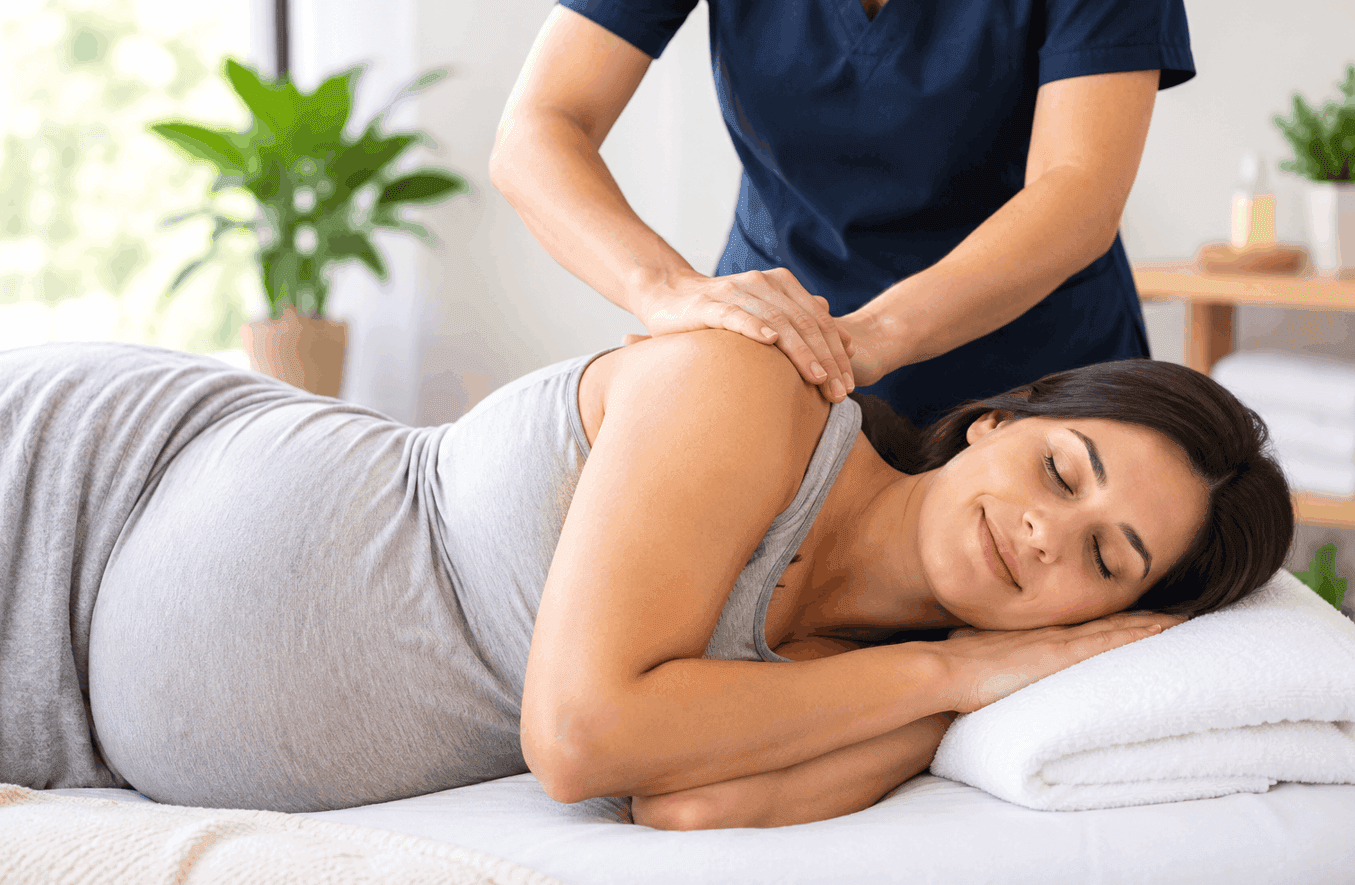
Pregnancy massage In Australia: is it safe, and what to expect
Aching hips, a sore lower back and shoulders that never quite relax are all common in pregnancy. Massage from a therapist trained in pregnancy care can help you feel more comfortable. Here's how it's done safely and what to check before you book.
MyoFitness Team · 5 min read - Remedial Massage13 Oct 2026

Pregnancy massage: is it safe, and what to expect.
Aching hips, a sore lower back and shoulders that never quite relax are all common in pregnancy. Massage from a therapist trained in pregnancy care can help you feel more comfortable. Here's how it's done safely and what to check before you book.
MyoFitness Team · 5 min read - Headache & Migraine12 Oct 2026
Tension headaches that start in your neck: what a myotherapist looks for, and what you can do at home
That band of pressure around your head often begins somewhere else entirely — in the small muscles at the base of your skull and across your shoulders. Here is how to tell, what treatment involves, and a ten-minute routine that helps.
MyoFitness Team · 9 min read
