
Which Recovery Methods Work Best After Exercise?What 99 Studies Found
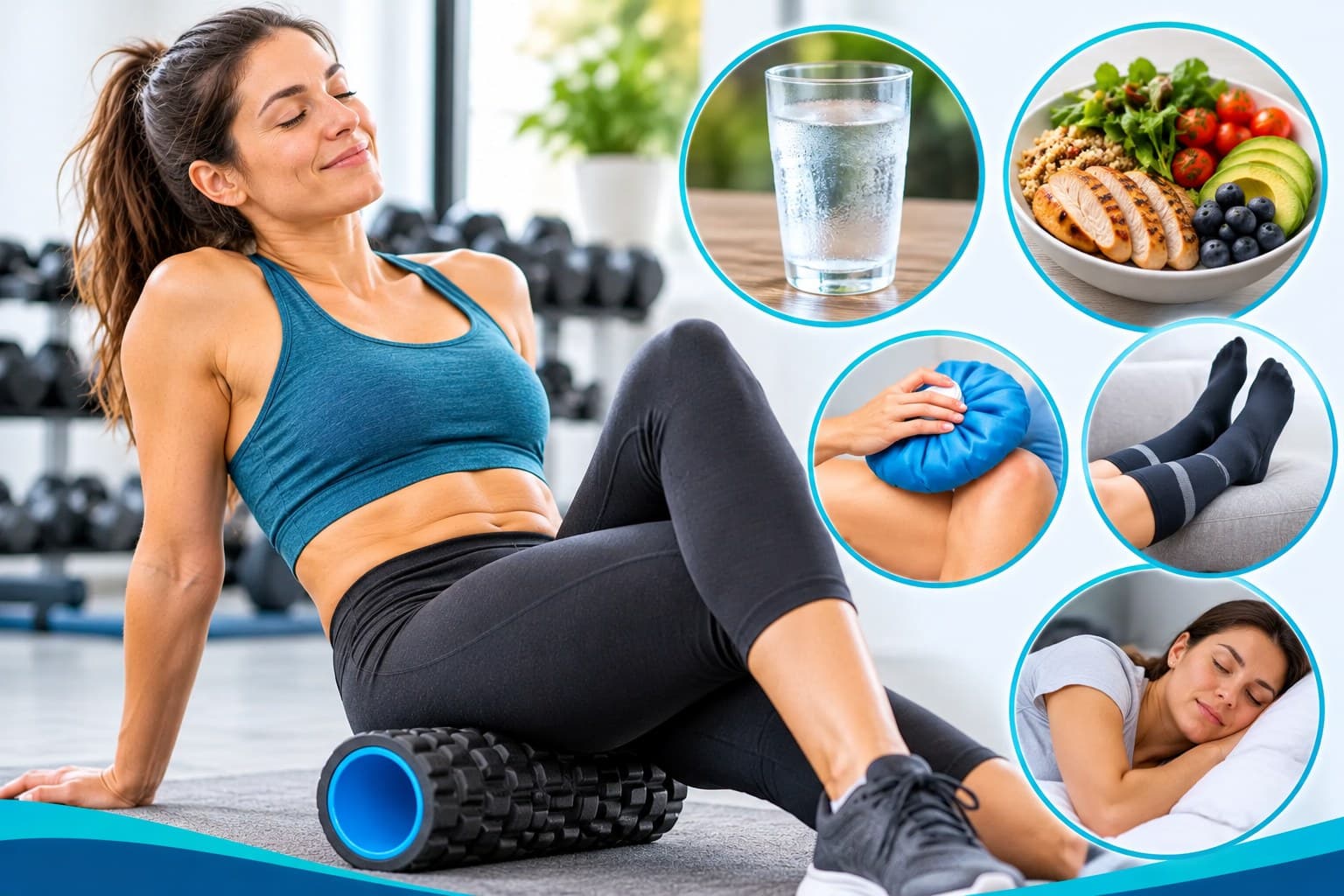
Comparing recovery methods across 99 studies, researchers found massage was the most effective for easing muscle soreness and perceived fatigue, while stretching and electrical stimulation didn't help.
- Written by
- MyoFitness Research Team
- Published
- Reading time
- 2 min read
- Year
- 2018
- Journal
- Frontiers in Physiology
- Study design
- Systematic review and meta-analysis of 99 studies
- Lead author
- Dupuy O et al.
What the study looked at
Athletes and active people use many recovery methods after hard exercise, including massage, compression garments, ice baths, stretching and gentle active recovery. Each has its fans, but which works best?
This French team compared recovery techniques across many studies, looking at muscle soreness, perceived fatigue and blood markers of muscle damage and inflammation. Why this matters to practitioners
Therapists are often asked how to recover after events and hard training. A head-to-head comparison helps them give practical, evidence-based advice about where massage fits among other options.
What each treatment involved
Soreness
80 studies with 1,188 participants measured delayed-onset muscle soreness.
Perceived fatigue
17 studies with 266 participants measured how tired people felt.
Blood markers
Other studies measured markers of muscle damage, such as creatine kinase, and of inflammation.
What the results showed
Several recovery methods helped, but some didn't, and massage stood out.
- 01
Massage was most effective for soreness
Massage had the largest effect on muscle soreness, ahead of active recovery, compression garments, cold therapy and water immersion.
- 02
Massage also eased fatigue
Massage was the most effective method for reducing how fatigued people felt.
- 03
Some methods didn't help
Stretching, electrical stimulation and hyperbaric therapy didn't significantly reduce soreness or fatigue.
- 04
Massage and cold lowered inflammation
Massage and cold exposure were the most powerful methods for reducing blood markers of inflammation.
Key finding in plain terms
Among common recovery methods, massage did the best job of easing muscle soreness and fatigue after exercise. Compression and cool water immersion also helped, while stretching didn't.
What this means for practice
This review supports post-exercise massage as one of the most effective ways to reduce soreness and perceived fatigue. Compression garments and cool water immersion are reasonable alternatives or additions.
The review didn't measure performance and looked at single recovery sessions, so it can't say whether massage helps athletes perform better next time. Sleep, food and sensible training loads remain the basics of recovery.
Clinical relevance by discipline
Sports massage
Supports post-event and post-training massage for soreness and fatigue. Keep pressure light after hard sessions.
Remedial massage
Clients with soreness after new or hard exercise may benefit. Set expectations about timing and comfort.
Myotherapy
Advise clients that stretching alone isn't an effective recovery tool for soreness, and suggest options that are.
Clients
Massage, compression and cool water can help you feel less sore. Stretching after exercise won't do much for soreness.
Limitations to be aware of
Participants couldn't be blinded, so placebo effects can't be ruled out. The training that came before recovery couldn't be analysed, and only single recovery sessions were studied.
Possible publication and language bias couldn't be excluded, performance wasn't measured, and some methods, such as vibration, were excluded because there were too few studies. The page reports 99 included studies, although the abstract metadata gives a slightly different number.
Summary
Across 99 studies, massage was the most effective recovery method for reducing muscle soreness and perceived fatigue after exercise, ahead of compression, cold and active recovery, while stretching and electrical stimulation didn't help.
For therapists, it supports post-exercise massage as a well-supported recovery option, alongside the basics of sleep, food and sensible training.
Full research paper
This page is a plain-language summary. The original paper holds the full methods, statistics and discussion.
Dupuy O et al. (2018). Which Recovery Methods Work Best After Exercise?. Frontiers in Physiology, 9.
DOI10.3389/fphys.2018.00403
Read the full paperEvidence-based treatment is available near you.
Find a qualified myotherapist or remedial massage therapist who works from the research, or write to us with a question about this study.
More research summaries
- For patientsLooking across seven reviews, manual lymphatic drainage
Does Lymphatic Drainage Help Lymphoedema After Breast Cancer? What 7 Reviews Found
Does Lymphatic Drainage Help Lymphoedema
European Journal of Gynaecological Oncology · 2023 - For patients
Can Treating the Neck Help Jaw Pain? What 5 Trials Found
In five small trials of people with temporomandibular disorders, mostly women, manual therapy to the neck reduced facial pain and improved jaw function in the short term.
Journal of Oral & Facial Pain and Headache · 2023 - For patientsLymphatic Drainage Prevent Arm Lymphoedema
Can Lymphatic Drainage Prevent Arm Lymphoedema? What a Randomised Trial Found
After breast cancer surgery with lymph node removal, adding manual lymph drainage to prevention advice and exercise didn't lower the number of people who developed arm lymphoedema in the first year.
BMJ · 2011