
Kinesiology taping: what the stretchy tape can and can't do.
You've probably seen colourful strips of tape on athletes' shoulders, knees and backs. Many myotherapists and massage therapists use it too. Here's what kinesiology tape is, what the evidence says, and how to get the most out of it if your therapist suggests it.
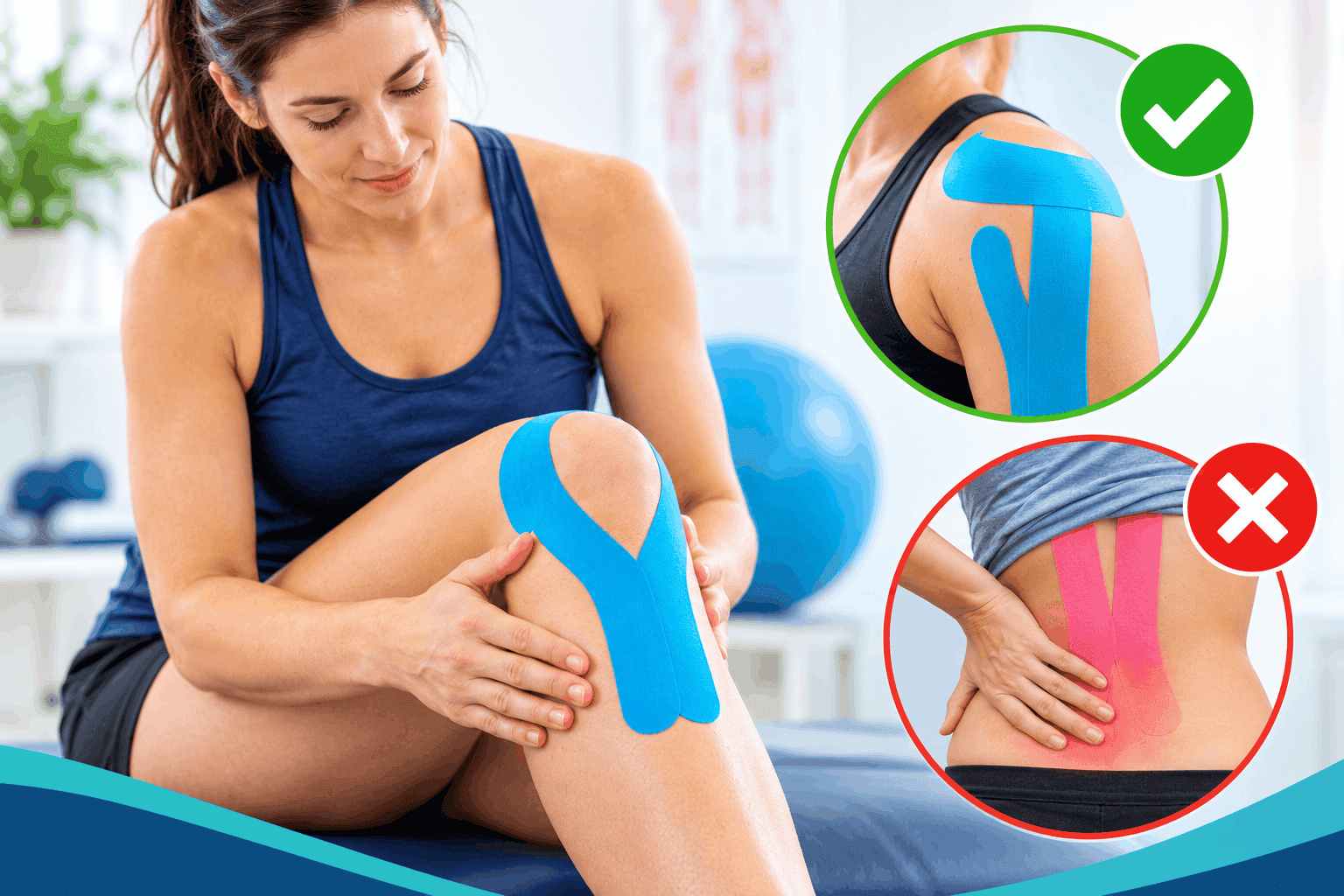
The short answer
- What it is
A thin, stretchy cotton tape with a gentle adhesive. It's designed to move with your body, unlike rigid sports strapping.
- Does it work?
Research shows small, short-term benefits at best for most conditions, and it usually isn't better than other treatments. Some people find it helps them feel supported and move more comfortably.
- Best use
As a short-term add-on to treatment and exercise, not as a fix on its own.
Kinesiology tape became widely known after it appeared on athletes at international sporting events. Since then it's become a common sight in clinics, gyms and at fun runs. It's simple, cheap and low risk, but it's also surrounded by some big claims.
This guide sets out what it is, what the research supports, and how to use it sensibly.
What it is
Kinesiology tape is a thin, elastic cotton tape with an acrylic adhesive, usually activated by body heat. It can stretch along its length, so it moves with your skin and muscles rather than holding a joint still.
| Kinesiology tape | Rigid sports tape | |
|---|---|---|
| Feel | Stretchy and flexible | Firm and non-stretch |
| Purpose | Comfort, feedback and support while moving | Limiting movement of a joint, such as an ankle |
| Wear time | Often a few days | Usually just for a game or training session |
- Kinesiology tape
- Stretchy and flexible
- Rigid sports tape
- Firm and non-stretch
Feel
- Kinesiology tape
- Comfort, feedback and support while moving
- Rigid sports tape
- Limiting movement of a joint, such as an ankle
Purpose
- Kinesiology tape
- Often a few days
- Rigid sports tape
- Usually just for a game or training session
Wear time
What it's claimed to do
Kinesiology tape is often marketed with claims that it lifts the skin to improve circulation and lymph flow, "activates" or "inhibits" muscles depending on how it's applied, and corrects posture. These explanations are popular, but they aren't well supported by research.
A more likely explanation is that the tape gives your body extra sensory feedback. The feeling of the tape on your skin may make you more aware of how you're moving, and may make an area feel more supported and less sensitive.
What the research says
Kinesiology tape has been studied for many conditions, including shoulder pain, knee pain, low back pain and sports injuries. Overall, the research suggests:
Any benefits tend to be small and short-term.
It often isn't better than other treatments, and in some studies performs similarly to sham or "fake" taping.
It's generally safe, with skin irritation the most common problem.
Tape won't fix the problem, but if it helps you move more comfortably while you do the things that will, it's earning its place.
That doesn't mean it's useless. If taping helps you feel confident enough to keep exercising or get through a work shift more comfortably, that's a real benefit. It just shouldn't replace the treatment and exercise that do the heavier lifting.
When therapists use it
Therapists commonly use kinesiology tape:
- To ease discomfort for a few days between sessions
- As a reminder of a movement or posture you're working on
- For a sense of support around a sore knee, shoulder or lower back
- In sport, to help people feel more comfortable returning to activity
Many people feel the effect quickly, often within minutes. If it doesn't help after a day or two, there's little reason to keep using it.
Wearing it
Before
Clean, dry skin with no oils or lotions. Some people trim hair in the area
Wear time
Often up to three to five days, but remove it sooner if it itches, lifts or feels uncomfortable
Showering
Most tapes are water resistant. Pat dry with a towel rather than rubbing
Removal
Peel slowly in the direction of hair growth, holding the skin down. Oil or water can help loosen it
Your therapist can show you how to apply it yourself if it's helping, so you don't need to come in every time.
Skin care and when to avoid it
Remove tape straight away if you notice itching, redness, a rash or blistering. Don't apply tape:
- Over broken skin, wounds, burns, or areas of skin infection
- If you've reacted to adhesives or plasters before
- Over areas with reduced feeling, such as with diabetic nerve changes, unless your therapist has checked
- Over a recent scar that hasn't fully healed
- On very fragile or thin skin
Finding a therapist
Many myotherapists and remedial massage therapists use taping as part of treatment. On the directory, search by what you're dealing with and check each profile's "How they work" section.
Ready to look?
Find a therapist near you
Search by suburb, therapy or what you're dealing with. Every listing is checked against a national association register.
This guide is general information, not medical advice. If you have a skin condition, an allergy to adhesives, diabetes affecting your skin, or circulation problems, check with your therapist or GP before using tape.
Find a myotherapist near you
Every practitioner in the directory is verified before their listing goes live. Search by suburb, therapy or health fund.
Related articles
- Wellness Tips26 Oct 2026
Health fund rebates, explained without the fine print.
Most people who see a myotherapist or remedial massage therapist can get part of the fee back through private health insurance, but only if a few things line up. Here's what needs to be true, how claiming works, and the questions worth asking your fund before you book.
MyoFitness Team · 6 min read - Myotherapy5 Nov 2026
Pain between the shoulder blades: common causes and what helps.
That nagging ache between the shoulder blades is one of the most common complaints from desk workers, drivers and new parents. It's usually muscle or joint related and responds well to treatment. Occasionally it's a sign of something else, so it's worth knowing the difference.
MyoFitness Team · 5 min read - Remedial Massage4 Nov 2026
7 signs your body needs treatment before it turns into an injury.
Most aches and stiffness settle on their own with a bit of common sense. But some early signs suggest a small problem is building into a bigger one. Here's how to tell the difference, and when it's worth booking in.
MyoFitness Team · 6 min read