
Jaw pain, clenching and headaches: the connection most people miss.
Plenty of people treat their headaches and never think about their jaw. But clenching and grinding can load the muscles of the jaw, temples and neck, and for some people that's part of why their head hurts. Here's how to spot the link and what to do about it.
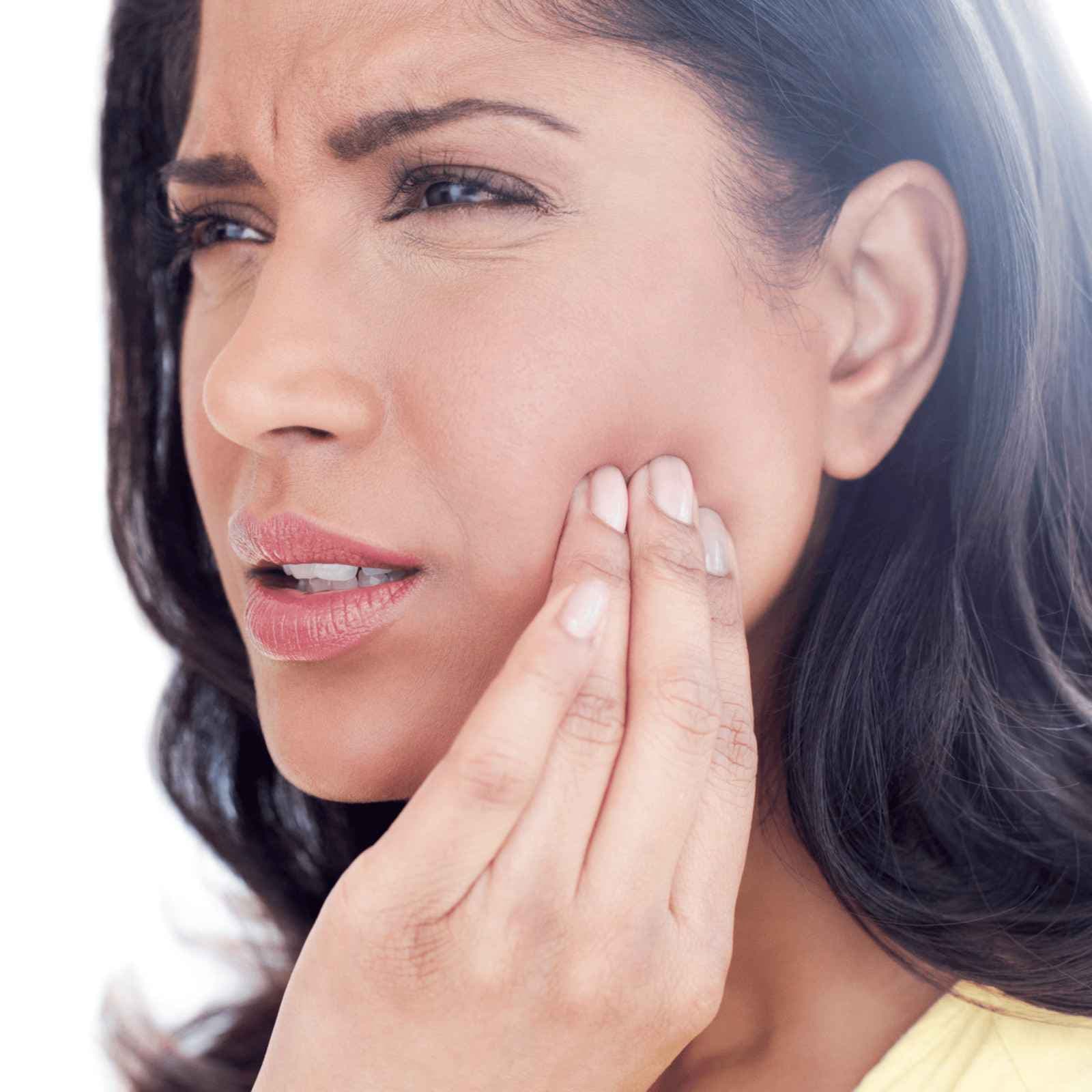
The short answer
- The link
Clenching and grinding work the jaw and temple muscles hard. Tension there, and in the neck, can contribute to headaches for some people.
- Signs to look for
Waking with a sore jaw or temple headache, worn or chipped teeth, tight cheeks and a partner who hears you grinding.
- What helps
A dentist check, simple daytime habit changes, stress and sleep support, and hands-on care for the jaw and neck muscles.
You wake up with a dull ache at your temples. Your jaw feels tired before you've even had breakfast. By mid-afternoon, there's a band of tension running from your jaw up the side of your head and down into your neck.
Many people don't connect these things. They treat the headache, stretch the neck, and never think about what their jaw is doing overnight or while they concentrate at work. For some people, clenching and grinding is a missing piece of the puzzle.
If you'd like the basics on jaw joint problems first, our guide to jaw pain and TMJ covers how the joint works and what treatment looks like. This guide focuses on the link between clenching and headaches.
What clenching and grinding are
Clenching and grinding are known as bruxism. It's common, and many people do it without realising. There are two main types:
| Awake bruxism | Sleep bruxism | |
|---|---|---|
| What happens | Clenching or bracing the jaw, often without grinding | Clenching or grinding during sleep, sometimes loud enough for a partner to hear |
| Often linked to | Concentration, stress, screen work, driving, exercise | Sleep disturbance, stress, some medicines, alcohol, caffeine and smoking |
| You might notice | Tight jaw or headaches building through the day | Sore jaw, tired face or headache on waking |
- Awake bruxism
- Clenching or bracing the jaw, often without grinding
- Sleep bruxism
- Clenching or grinding during sleep, sometimes loud enough for a partner to hear
What happens
- Awake bruxism
- Concentration, stress, screen work, driving, exercise
- Sleep bruxism
- Sleep disturbance, stress, some medicines, alcohol, caffeine and smoking
Often linked to
- Awake bruxism
- Tight jaw or headaches building through the day
- Sleep bruxism
- Sore jaw, tired face or headache on waking
You might notice
Bruxism isn't always a problem. Some people clench or grind with no symptoms at all. It becomes worth addressing when it's causing pain, headaches or damage to your teeth.
Many people have a mix of both types. You might clench while you concentrate at your desk, then grind at night during a stressful week. Noticing when it happens is the first step, because the most useful changes are different for daytime and night-time clenching.
How the jaw and headaches connect
The main chewing muscles sit right where many people feel their headaches. The masseter runs down the side of your face to the angle of your jaw, and the temporalis fans out across your temple. When you clench, both work hard. Hold that for long periods, or repeat it night after night, and they can become tired, tight and tender.
Tender spots in these muscles can refer pain into the temples, around the eyes, into the teeth and towards the ear. The neck often gets involved too. The muscles at the back and side of the neck tend to brace when the jaw is clenched, and neck tension is a common contributor to headaches in its own right.
If your headaches sit at your temples and your jaw feels tired, the two may be more connected than you think.
This doesn't mean every headache comes from your jaw. Migraine, tension-type headache and other conditions have their own causes. But for some people, settling down the jaw and neck makes headaches less frequent or less intense.
Signs you might be clenching
Because it often happens unconsciously, the clues are usually indirect. Common signs include:
- Waking with a sore jaw, tired face or a headache at your temples
- Teeth that look worn, flattened, chipped or more sensitive than they used to
- A partner who hears grinding at night
- Catching yourself with teeth pressed together while working, driving or at the gym
- Wavy marks along the edges of your tongue, or a line on the inside of your cheeks
- Enlarged or very firm muscles at the angle of your jaw
Stress, sleep and habits
Stress is one of the most common things people link to clenching. Many people notice their jaw tightens during busy periods at work or when they're worried about something.
Sleep matters too. Sleep bruxism can be associated with disturbed sleep, and in some people with sleep-disordered breathing such as obstructive sleep apnoea. If you snore loudly, stop breathing or gasp in your sleep, or feel very tired during the day, mention it to your GP. It's worth looking into for its own sake, not just for your jaw.
Daytime habits that may help:
Check your rest position: lips together, teeth apart, tongue resting on the roof of your mouth
Set reminders, such as a sticker on your screen or a check-in each time you stop at a red light
Cut back on gum chewing and chewing pens or nails
Be aware of caffeine and alcohol, particularly in the evening
Your dentist and splints
If you think you clench or grind, your dentist is a good place to start. They can check for wear and damage, rule out tooth problems that feel like jaw or head pain, and talk to you about whether a night splint (occlusal splint) might help.
A custom-made splint is mainly used to protect your teeth from grinding. Some people find it eases morning jaw pain as well, though it doesn't suit everyone and doesn't necessarily stop the clenching itself. Your dentist can explain the options and costs.
How a myotherapist can help
A myotherapist can work alongside your dentist and GP to treat the muscle side of the problem.
Assessment
Checking jaw movement, the chewing muscles, temples, neck and upper shoulders to find areas that reproduce your headache
Treatment
Gentle soft tissue and trigger point work on the jaw, temple and neck muscles, and sometimes intra-oral work or dry needling if you're comfortable
At home
Simple jaw relaxation exercises, rest position practice and advice on desk setup and neck tension
Research suggests manual therapy and exercise can help some people with jaw muscle pain, though results vary and the evidence isn't strong for every type of headache. On the directory, you can filter by Jaw & TMJ pain or Headaches & migraine to find therapists who list these areas.
When to see a GP or call 000
Call 000 Call 000 if jaw pain comes with chest pain or pressure, shortness of breath, sweating or pain spreading into your arm, neck or back, which can be signs of a heart attack. Also call 000 for a sudden, severe headache, or a headache with weakness, numbness, slurred speech, confusion or a stiff neck and fever.
See your GP or dentist promptly if you have:
- A jaw that has locked open or closed
- New headaches with scalp tenderness, jaw pain when chewing or changes in your vision, particularly if you're over 50
- Headaches that are new, changing in pattern or steadily getting worse
- Swelling, fever, or pain in a tooth or gum
- Numbness in your face, or pain after a blow to the jaw or head
Ready to look?
Find a therapist who treats jaw pain and headaches
Search by suburb, therapy or what you're dealing with. Every listing is checked against a national association register.
This guide is general information, not medical advice. Headaches and jaw pain can have many causes, so see your GP or dentist for an assessment, especially if your headaches are new, changing or severe.
Find a myotherapist near you
Every practitioner in the directory is verified before their listing goes live. Search by suburb, therapy or health fund.
Related articles
- Jaw & TMJ20 Oct 2026
What your headaches could actually be coming from.
Most headaches aren't a sign of anything serious, but working out what's behind yours makes a big difference to what helps. Here are the most common sources, where a myotherapist can help, and the signs that mean you should see a doctor first.
MyoFitness Team · 7 min read - Jaw & TMJ7 Oct 2026
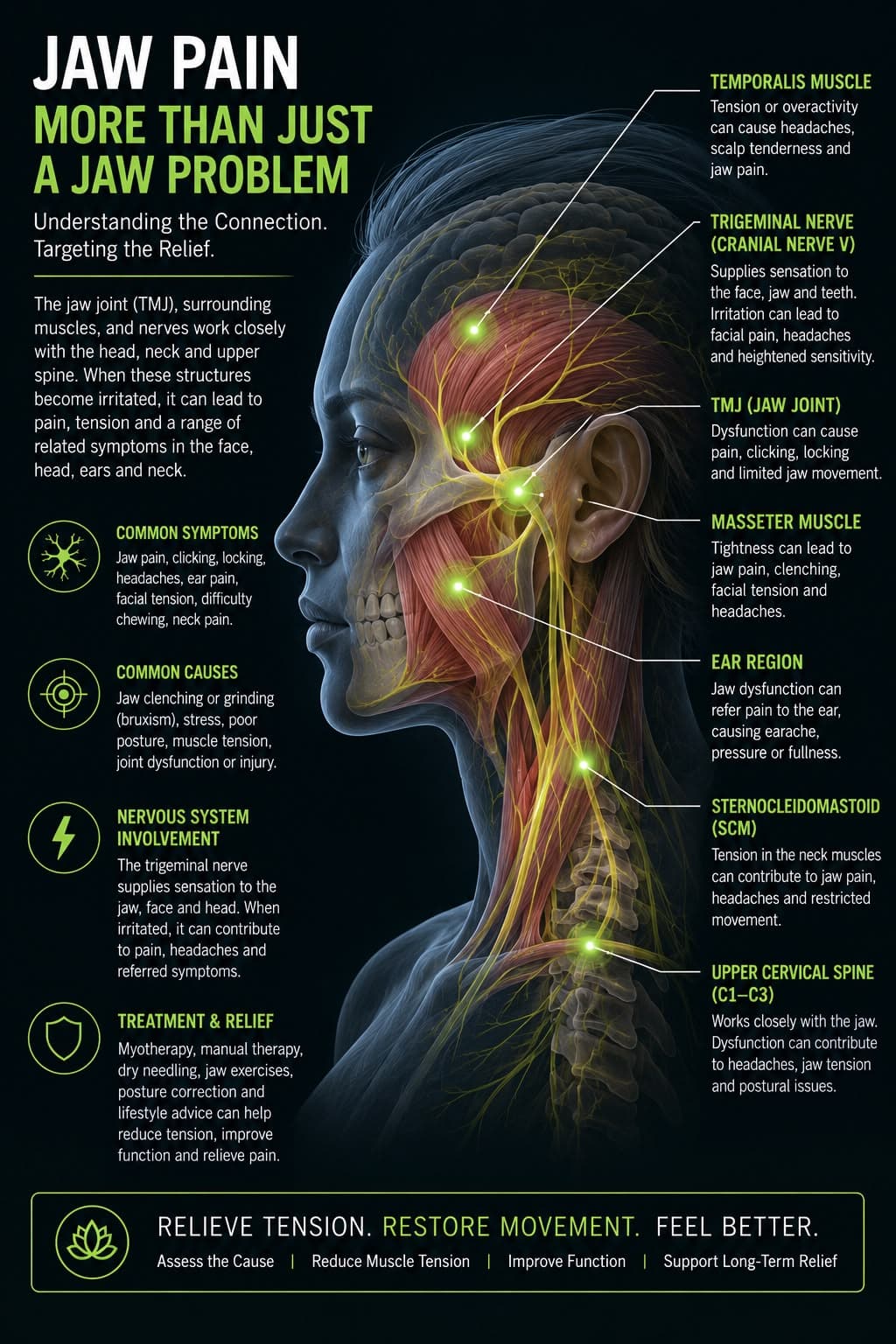
Relief from TMJ, jaw pain and facial tension
Jaw pain rarely stays in the jaw. It travels into headaches, ears and the neck — and the assessment that finds why is the one that looks at all of them at once.
MyoFitness Team · 11 min read - Myotherapy22 Oct 2026

Your first session: what actually happens in the room.
Not knowing what to expect is one of the main reasons people put off booking. This guide walks you through a typical first appointment, from the intake form to the next morning, so you can arrive relaxed and get the most out of the hour.
MyoFitness Team · 7 min read