
Postnatal C-section scar treatment: heal the scar, restore function
Your incision healed months ago. The tissue underneath may not have — and that is usually what is behind the pulling, the back pain, and a core that feels weak no matter how strong the muscles are.
The short version
- The collagen that sealed your wound can bind layers that are meant to slide past each other.
- That is why a core can feel weak while the muscles themselves are perfectly strong.
- Treatment starts once the wound is closed — usually week six, sometimes four or five.
- Years later still counts. Chronic adhesions take longer to settle, not forever.
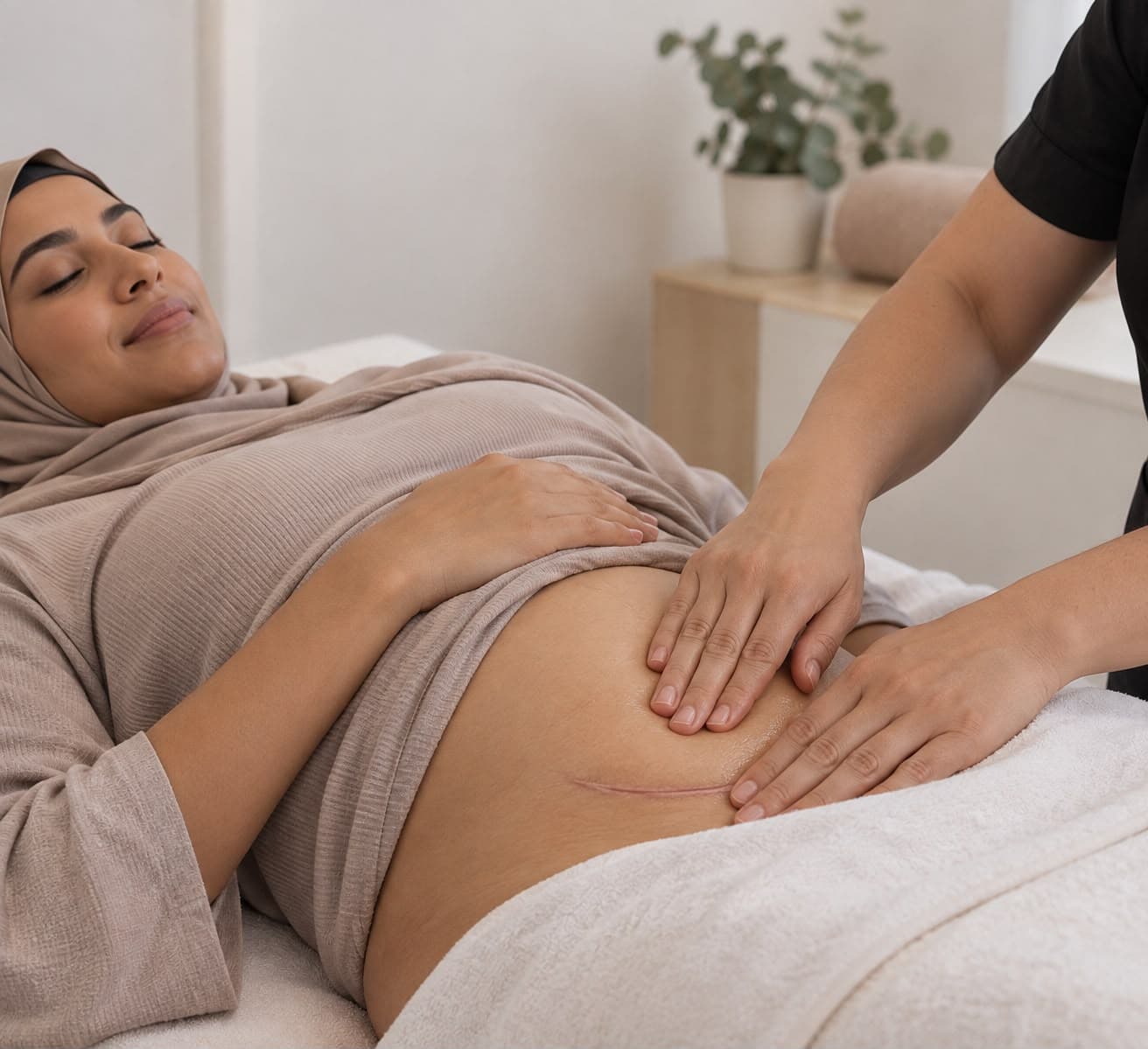
Specialised scar tissue release and fascial adhesion treatment for postnatal recovery: reduce pain, improve mobility and strengthen your core after a caesarean delivery. Treatment is tailored to the stage of recovery you are actually at, not to a number of weeks on a chart.
What we treat
- C-section scar adhesions
- Fascial restrictions
- Scar tissue tightness
- Postnatal core weakness
- Abdominal wall tension
- Postpartum pain and mobility
Almost every week someone tells us the same thing: the scar looks fine, the six-week check was fine, and something still is not right. A pulling sensation when they stand up. A back that aches by mid-afternoon. A stomach that will not switch on however many exercises they do.
The scar is usually not the problem. What is underneath it is.
Three key areas: scar, fascial and functional
Each of the three responds to different work, so each is assessed on its own.
Scar tissue formation
- Thick or raised scar
- Adhesion development
- Scar hypersensitivity
- Limited skin mobility
- Pulling or tightening
The surgical incision heals, but underlying scar tissue can restrict movement and create tension that spreads throughout your body.
Fascial restrictions
- Deep adhesion bands
- Abdominal wall tightness
- Restricted tissue glide
- Fascial binding
- Movement limitations
Scar tissue adheres to underlying fascia and muscles, restricting their ability to move freely and function properly.
Functional impact
- Weak core muscles
- Back or pelvic pain
- Postural changes
- Reduced exercise tolerance
- Sitting and lifting difficulty
Scar adhesions prevent your core muscles from working properly, leading to pain, weakness and functional limitations in daily life.
Scar tissue and adhesion formation
When your caesarean incision heals, the body lays down collagen to seal the wound. However, this healing process can create adhesions — abnormal connections between layers of tissue that should normally move independently.
These adhesions restrict tissue mobility, cause tightness and pulling sensations, and prevent your abdominal muscles from functioning properly. Many women experience these symptoms for months or even years after delivery without understanding the cause.
The good news: targeted scar tissue release can break down these adhesions and restore normal tissue mobility. The earlier treatment begins, the more reversible the adhesions are. Even years later, scar treatment can improve function and reduce pain.

Four layers that should slide
Skin, fat, fascia and muscle each move over the next one every time you breathe, twist or stand. Where the incision crossed them, two of those layers can end up bound together — and from then on they move as one.
- Skin that will not lift or roll near the line.
- A pulling feeling when you reach overhead.
- A dip or shelf along the scar that does not soften.
What recovery usually looks like
of women report significant pain reduction within 6–8 weeks of targeted scar treatment
months can pass before scar adhesions resolve naturally; treatment speeds recovery to 4–6 weeks
of our clinicians are trained in safe postnatal scar release and core restoration
Fascial adhesions and abdominal wall dysfunction
Your C-section scar goes deep. Below the skin, it cuts through muscle fascia — the connective tissue surrounding your abdominal muscles. When scar tissue binds this deep fascia, it creates restrictions that prevent your core muscles from working correctly.
This is why many postpartum women feel weak in their core despite having physically strong muscles: the adhesions prevent proper muscle activation and coordination. Your deep abdominal muscles, the transverse abdominis, cannot engage effectively, throwing off your posture and core stability.
Our fascial release work specifically targets these deep adhesions, restoring tissue mobility and allowing your core muscles to engage and function properly again. This is essential for returning to exercise, preventing back pain and feeling strong.
Fascial binding, in one sentence
Scar tissue adheres to the fascia around your rectus abdominis and transverse abdominis, preventing them from sliding past each other during movement — which is a coordination problem, not a strength problem.
Techniques used in myotherapy
Every technique is selected from what the assessment found, not from a fixed protocol.

Scar tissue release
Deep, targeted work on the scar itself to break down adhesions, improve skin mobility and reduce tightness. Safe for all healing stages from six weeks post-delivery onward.

Fascial decompression
Specialised techniques to release restrictions in the deep fascia surrounding your abdominal muscles, restoring tissue glide and muscle function.

Core muscle retraining
Progressive activation and strengthening of your deep core muscles — transverse abdominis and multifidus — to restore stability and prevent future pain.

Myotherapy and soft tissue work
Targeted muscle release to address tension in your abdominal wall, back and pelvic area — the areas most commonly affected by scar restriction.

Joint mobilisation
Passive movement applied through specific joint ranges to restore normal joint mechanics, reduce stiffness and improve the signalling that tells the brain the joint is safe to move.

Cupping therapy
Negative-pressure cups applied to the skin to create a lifting and decompressive effect on underlying tissue, separating fascial adhesions and drawing blood flow to chronically tight muscle groups.

Corrective exercise
Targeted exercise prescribed to address the biomechanical patterns sustaining a condition, rebuild muscle capacity, improve movement quality and reduce the likelihood of recurrence between sessions.

Neurodynamic techniques
Specific movements that assess and treat the mechanical behaviour of peripheral nerves, used when neural involvement is contributing to symptoms that standard soft tissue treatment is not resolving.

Postural and ergonomic assessment
Identification of the sustained loading patterns — at work, at a screen, during sport or in sleep — that are contributing to tissue stress and pain, with practical strategies to modify them.
Does this sound like you?
Real presentations, and what is usually driving each one.

Common postpartum complaints
Back pain, pelvic pain, inability to exercise, weak core, heaviness or pressure, and fear of re-injury holding you back from normal activity.

Exercise readiness
You may be cleared for exercise at 6–8 weeks postpartum, but scar restrictions can prevent you from exercising effectively or safely. We check that your core and pelvic floor are truly ready before impact or intense work.

Pelvic floor connection
Scar restrictions affect pelvic floor muscle tension and coordination. Many women have tight pelvic floors compounded by abdominal wall restrictions — addressing both is essential.

Core dysfunction and posture
Difficulty engaging your core, lower back pain, weak abdominal muscles and an inability to return to pre-pregnancy exercise. Anterior pelvic tilt, an increased back curve and a protruding belly develop as compensations.
Timeline to function
What most people can expect, assuming treatment starts promptly.
- 4–6 weeks
Significant pain reduction
The pulling settles, skin mobility returns around the line, and mobility through the trunk improves noticeably.
- 8–12 weeks
Return to normal activity
Lifting, carrying and sitting for long stretches stop being negotiations. Core activation is reliable rather than occasional.
- 12+ weeks
Return to exercise
Impact and intense work come back, built on a core that engages properly and a pelvic floor that is coordinated with it.
Normal healing, or adhesions?
All C-section incisions scar. Not all of them develop adhesions — and the difference is what decides whether treatment is worth it.
Normal scar healing
- The scar line becomes less visible over 3–6 months.
- Tenderness fades steadily rather than plateauing.
- Skin near the line lifts and rolls freely.
- Core strength returns with ordinary postnatal exercise.
Adhesive scarring
- Scar pain that does not improve month to month.
- A pulling sensation in the belly with reaching or standing.
- Difficulty with specific movements rather than general fatigue.
- Weak core function months after delivery despite strong muscles.
Late is still worth treating
Chronic scar restrictions present for years still respond to myofascial release and scar work. The timeline is longer — 8–12 weeks rather than 6 — but improvement is absolutely possible.
Common questions
About scar healing and postnatal recovery.
When can I start scar tissue treatment after my C-section?
Most clinicians recommend waiting until your surgical wound is fully closed and you have been cleared for exercise, typically six weeks postpartum. Very gentle soft tissue work can often begin as early as four to five weeks if your incision is healed. We assess your individual healing before beginning treatment — the earlier you start, the better the results, because early treatment prevents adhesions from becoming chronic.
What is the difference between normal scar healing and problematic adhesions?
All C-section incisions scar, but not all scars develop adhesions. Normal healing involves the scar line becoming less visible and tender over three to six months. Adhesions form when scar tissue binds to underlying tissues, creating pulling sensations, tightness or functional restrictions. Signs include scar pain that does not improve, a pulling sensation in your belly, difficulty with certain movements, or weak core function months after delivery.
I am years past my C-section and still have pain. Can treatment still help?
Yes. Even years later, scar tissue and adhesions can improve significantly with targeted treatment. While early treatment is ideal, chronic scar restrictions that have been present for years still respond well to myofascial release and scar tissue work. The timeline may be longer — eight to twelve weeks instead of six — but improvement is absolutely possible.
Can scar tissue treatment affect breastfeeding or other postpartum care?
No. Our treatment is external myofascial work on your scar and surrounding tissues; it does not affect milk production, breast tissue or any internal postpartum healing. Gentle scar work is safe even if you are actively breastfeeding. Reducing pain and tension can in fact help you feel more relaxed during feeding.
Why is my core weak if my muscles are physically strong?
Scar adhesions prevent your abdominal muscles from activating properly. Your muscles may be structurally fine, but adhesions bind them to surrounding tissue, preventing the coordinated contraction needed for core stability. This is a functional problem, not a strength problem. Once adhesions are released and muscle activation is retrained, core strength returns quickly — often within two to three weeks of focused work.
Is it normal to have back pain and pelvic pain months after a C-section?
It is common, but not normal. Many postpartum women accept ongoing pain as a permanent result of having a C-section. Persistent back pain and pelvic pain are usually signs of unresolved scar adhesions and core dysfunction, both of which are treatable. Once these are addressed, most women become pain-free.
When can I return to exercise after scar tissue treatment?
This depends on your healing stage and the extent of adhesions. Most women begin light exercise — walking, gentle pilates, stretching — at six to eight weeks postpartum once cleared by their GP. With significant adhesions we recommend two to three weeks of scar treatment before starting. High-impact exercise typically waits until twelve weeks postpartum with proper scar and core recovery.
Will my scar eventually disappear?
C-section scars fade significantly over twelve to eighteen months, but they do not completely disappear — you will always have a thin line. What matters most is that the scar becomes mobile, painless and no longer restricts your function. Treatment improves scar appearance by improving tissue mobility and reducing inflammation. Younger scars respond faster than older ones, but appearance improves at any stage.
Do I need a referral or medical clearance?
No referral is required. We do recommend clearance from your GP or obstetrician before beginning treatment, especially if you are fewer than six weeks postpartum. Most GPs clear patients for gentle scar work at six weeks. If you are uncertain about your readiness, we can advise whether to wait or whether early treatment is appropriate for your situation.
What can I claim on my health insurance?
HICAPS is used at all clinics for on-the-spot private health claiming. Most health funds cover myotherapy and massage, which are the primary treatments for scar tissue release. Medicare rebates are available under a GP Chronic Disease Management plan. Confirm your specific cover before your first appointment so your rebates are not missed.
Find a myotherapist near you
Every practitioner in the directory is verified before their listing goes live. Search by suburb, therapy or health fund.
Related articles
- Lymphatic Drainage9 Oct 2026
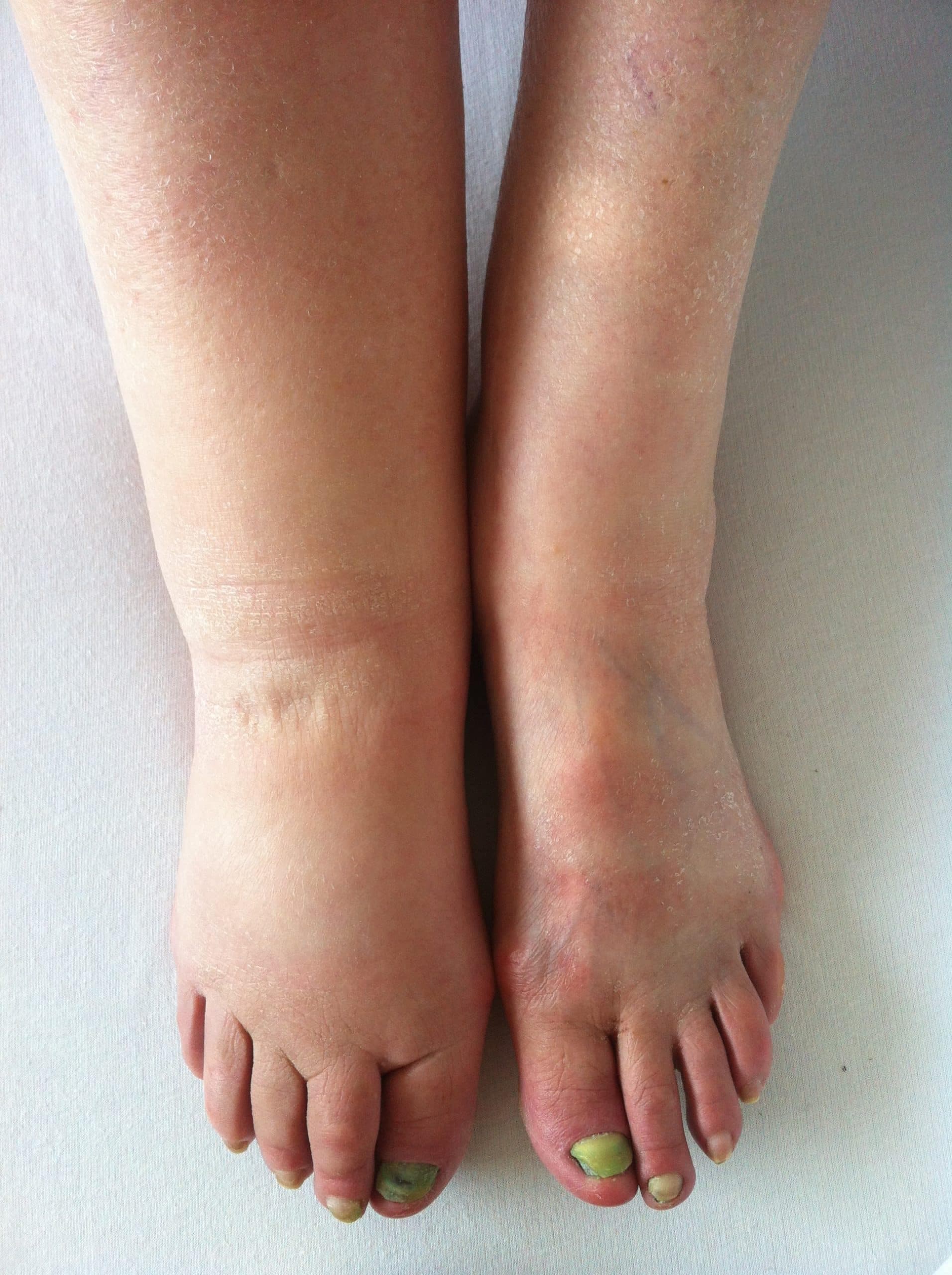
Lymphoedema and chronic swelling: how does lymphatic drainage work?
Lymphoedema is incurable but highly manageable — and the thing that decides which of those two words you live with is how early professional drainage starts.
MyoFitness Team · 8 min read - Jaw & TMJ20 Oct 2026

What your headaches could actually be coming from.
Most headaches aren't a sign of anything serious, but working out what's behind yours makes a big difference to what helps. Here are the most common sources, where a myotherapist can help, and the signs that mean you should see a doctor first.
MyoFitness Team · 7 min read - Injury & Recovery19 Oct 2026
Why your back pain keeps coming back, even after massage.
You book a massage, walk out feeling looser, and a week or two later the same ache is back. It's one of the most common stories therapists hear. Here's what's usually going on, and what tends to make a longer-lasting difference.
MyoFitness Team · 7 min read